
The Joy Score
A brilliant North Star
Updated: March 17th, 2025
The Joy Score™ goes past standard metrics like NPS and CSAT to surface the emotional undercurrents shaping customer experience. Surveys can offer value, but they are limited by when they are sent, how their questions are framed, and the effort they ask of customers.
The Joy Score reads the interactions customers already produce, including reviews, support tickets, help-desk transcripts, and feedback submissions. This gives a steady, low-friction view into how an offering is landing, and surfaces early signals tied to retention, loyalty, and long-term value.
Why it matters
- Immediate insight: see where users feel genuine delight and where they hit real pain.
- Sharper roadmaps: focus on the changes that truly matter to your audience.
- Broader reach: read any feedback channel you already have, with no new surveys.
Landing success signals
- Joy (✨): genuine delight or praise.
- Confidence (😎): trust in reliability or long-term value.
- Engagement (👀): ongoing interest or willingness to participate.
- Frustration (😤): feeling blocked or annoyed, but not fully giving up.
- Hopelessness (🙁): a deep breakdown of trust or belief in the offering.
Each signal stands on its own. Taken together, they form a weighted Joy Score that reveals an offering's landing picture, from Hopelessness to Joy.
Where you stand on the spectrum
Bloom condenses its five emotional signals into a single describable score, mapping feedback on a range from Hopeless to Joyful. A combined score of 1.6 reads as Leaning Confident, where users mostly trust the offering. A score of -2.2 reads as Leaning Hopeless, where pain points turn urgent. Figures A and B show both.
The Joy Score is a weighted sum of how often each of the five signals appears across customer interactions, relaying the dominant emotion while still accounting for diverging sentiment. The result surfaces an at-a-glance yet deeper sense of your audience's emotional climate.
Emotions to growth actions
Turning signals into action
- Joy & Confidence: celebrate strengths and double down on what users love.
- Engagement: keep refining; people are invested and open to improvement.
- Frustration: clear the pain points first; quick wins convert detractors into fans.
- Hopelessness: urgent attention to rebuild trust.
Organizations from hospitality to tech can intervene more strategically once they understand why their audience feels the way it does.
Stable, ready for growth
One of the Joy Score's greatest strengths is how steadily it tracks user sentiment across time periods, even when feedback volumes are relatively low. This customer-grounded stability offers a consistent yardstick for spotting real shifts in outlook.
Case in point: Vueling's quarterly data shows the Joy Score holding close across consecutive periods.
- Figure C, 2024 Q3: -0.66 (Mostly Frustrated)
- Figure D, 2024 Q4: -0.62 (Mostly Frustrated)
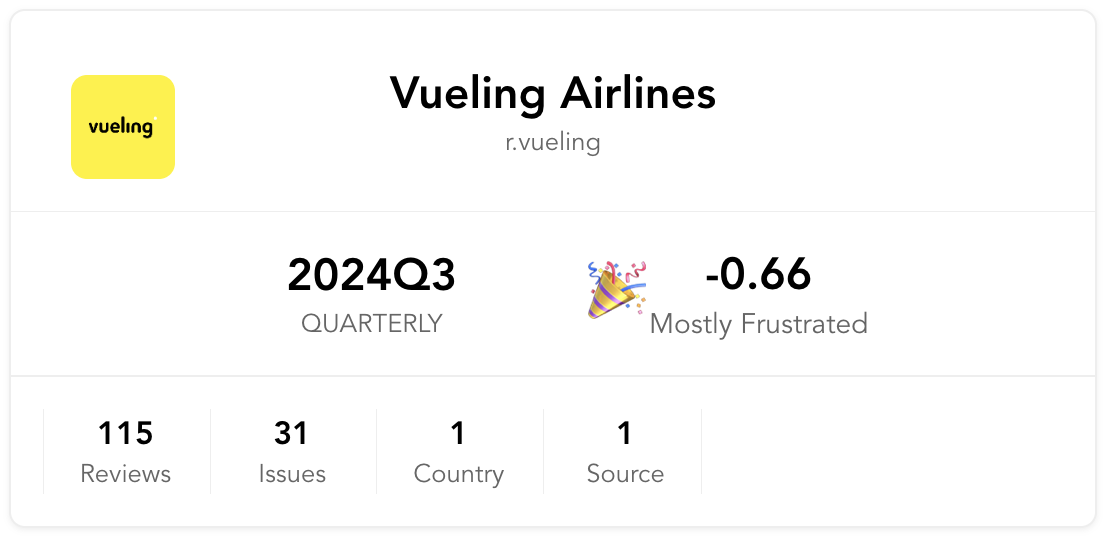
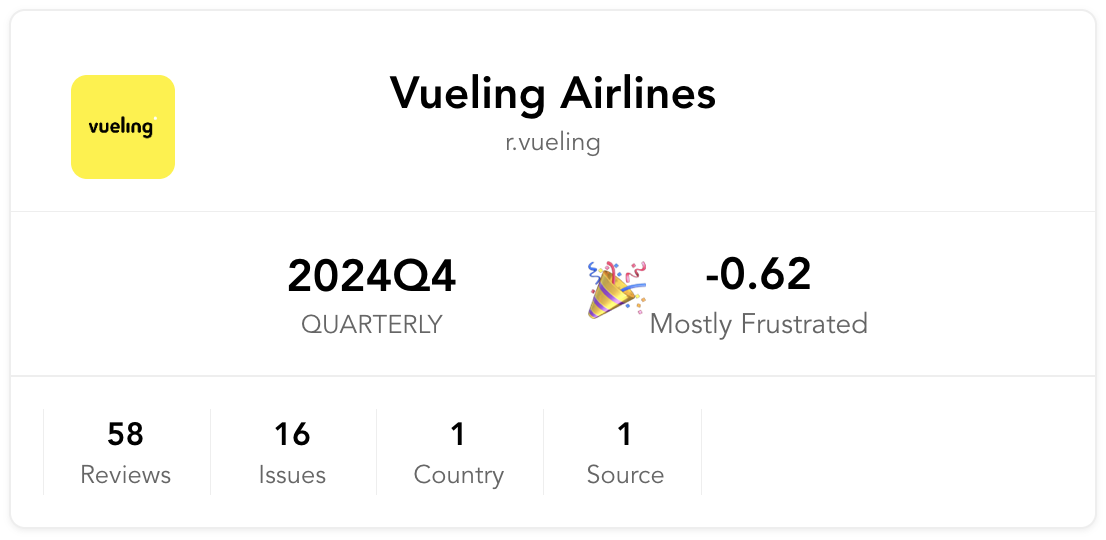
The overall score stays within a similar range, a stable trend leaders can watch for subtle improvement or emerging risk. That reliability makes it easier to tell whether a change in sentiment is meaningful or just short-term noise.
Essential takeaways
- Simple, powerful clarity: across five emotional signals, the Joy Score reveals where customers feel truly enthusiastic or blocked.
- Timely and scalable: it reads feedback you already have, without inundating users with surveys.
- Holistic guidance: from product tweaks to brand strategy, teams use the signals to prioritize and measure success.
- Inspectable: every score opens back up to the five sentiments underneath it, so you see exactly where to focus.
Bloom reads organic customer interactions and gives the emotion in them a grounded number, so teams can shape growth around what customers actually need.
Ready for the next step?
If the Joy Score sparks your interest, a briefing is the fastest way to see it on your own data.